When Japan opened its ports in the nineteenth century, western medicine was made compulsory and Kampo was pushed to the edges. It did not disappear. It waited, quietly, until the country needed it again.
The 148 formulas that stayed.
Modern Kampo is a small, tightly regulated formulary: 148 combinations of herbs, many of them first recorded in the Shang Han Lun in the second century, all now manufactured to standards set by Japan's Pharmaceuticals and Medical Devices Agency (PMDA). Every one is subject to the same manufacturing rules as a synthetic drug. A doctor writes a prescription. A pharmacist dispenses granules. The whole thing takes ten minutes.
How a Kampo prescription is chosen.
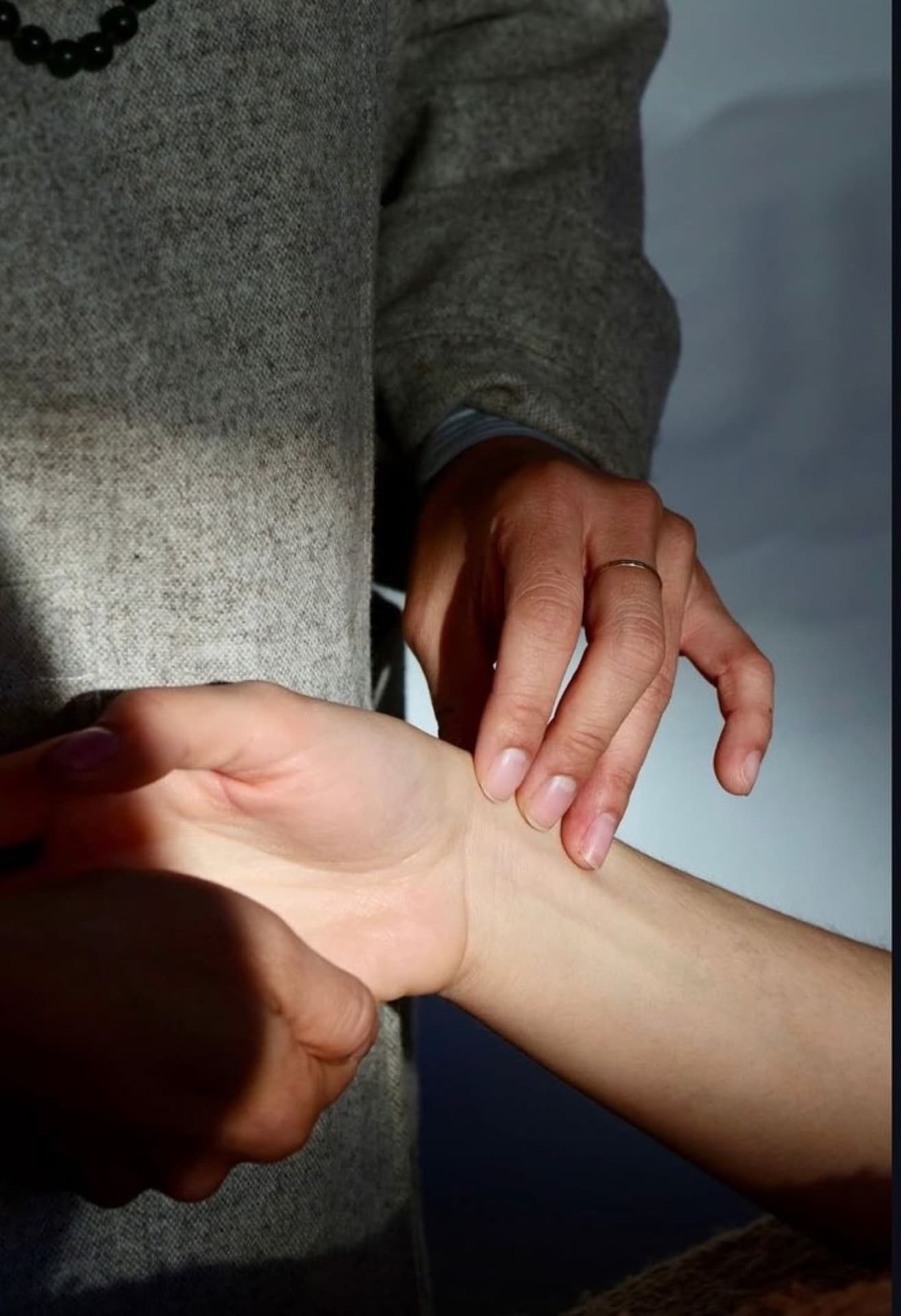
The distinctive move in Kampo is pattern-matching. A Kampo-trained doctor takes a pulse, looks at the tongue, presses gently on the abdomen, and asks about temperature, appetite and mood. The answer is not a diagnosis in the western sense. It is a shape, and a shape has a formula. Two people with the same cold, matched to different shapes, will get different granules.
What Modern medicine has borrowed.
Because the formulas are prescribed inside a modern health system, Japanese researchers can run randomised trials on them, and have: hangeshashinto for mouth ulcers during chemotherapy and yokukansan for behavioural symptoms in dementia are two of the better-studied examples, with small, mixed results rather than miracles. None of that research would exist without Japan's decision in 1976 to bring Kampo extracts into national health insurance and let its own doctors work from the shelf.