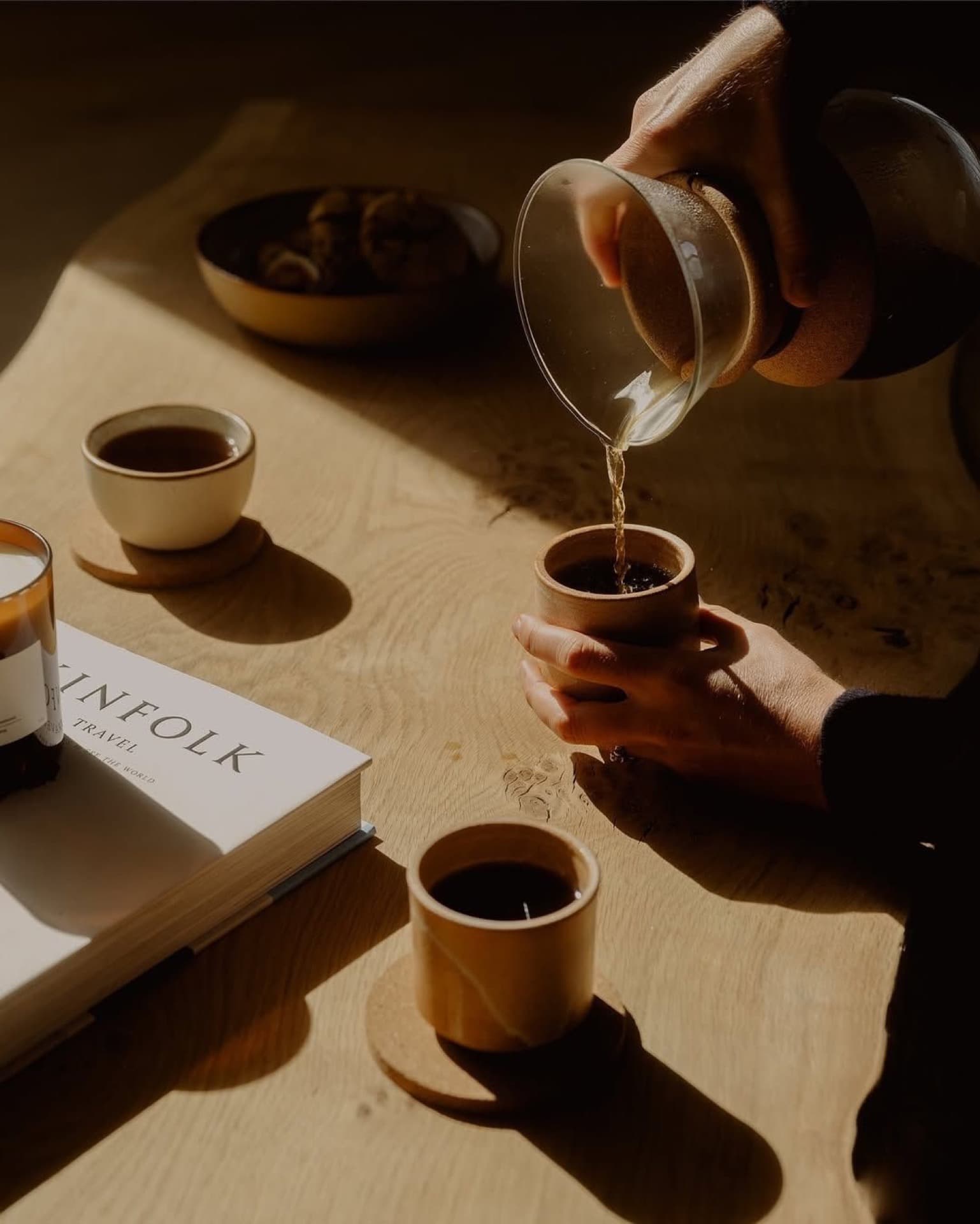
Every tradition has a warm drink for a difficult stomach. Turn any of them upside down and the same three ingredients fall out: hot water, a bitter herb, and a small piece of ginger. That is not a coincidence, and it is not folklore. It is a set of interventions that show up wherever people have lived long enough to notice what works.
Warm water is doing more than you think.
The single most consistent remedy across the thirteen traditions Remedae holds is a cup of warm water. In Ayurveda it is ushnodaka, taken on rising to move the channels. In Traditional Chinese Medicine it is the base for every decoction. In Kampo it is the vehicle for the herbs. Modern medicine has no trial of warm water on its own, and says so; what it does have is a long habit of prescribing fluids and a gentle walk after meals for a sluggish stomach.
Nobody has run a large trial of warm water, and it is unlikely anyone will: there is nothing to patent. What the traditions share is the habit, taken slowly, at the same time each day. Remedae grades that honestly, as documented use rather than proof, on every card where it appears.
The bitter herb, whichever one you can find.
The second common ingredient is a bitter. In your kitchen it might be dandelion, chicory, artichoke, rocket, or a wedge of grapefruit. Bitter taste receptors sit in the gut as well as on the tongue, and researchers have shown they trigger digestive secretions when something bitter arrives. You do not need a supplement. You need something bitter, at the front of the meal.
What we won't tell you.
None of this replaces a clinician. If a symptom is new, severe, or getting worse, the correct answer is not a warm drink. It is a doctor. Traditional remedies are for the everyday, small complaints a body throws at you in a year. For anything more, use both.